Traditional Nail File vs Crystal Glass Nail File: Which One Is Better
September 15, 2026
Some beauty tools are tiny, cheap, and easy to ignore until they betray you in public. A nail file is one of them. One minute you are reaching into your bag for a quick fix. The next, your nail edge looks like it lost a fight with a sidewalk.
Traditional nail files have been the go-to for years. They are familiar, inexpensive, and everywhere. Crystal glass nail files feel a little more fancy, a little more mysterious, and a lot smoother once you try one.
So which one deserves a permanent spot in your manicure kit? Let’s compare them in a fun, no-snobbery way.

The quick answer for busy nails
If you want the short version, here it is: a crystal glass nail file is usually the better everyday choice for natural nails, especially if your nails peel, split, or feel weak at the tips.
A traditional nail file still has a place. It is cheap, easy to replace, and useful for quick shaping. But it wears down, can feel rough, and may leave the nail edge more ragged if used with too much pressure.
Here is the simple breakdown:
Traditional nail file
Crystal glass nail file
Best for low-cost, quick filing, travel backups, and occasional use
Best for smoother shaping, long-term use, easier cleaning, and gentle daily care
Think of a traditional file like a paper coffee cup. Totally useful. It does the job. But you probably would not call it your forever cup.
A crystal glass file is more like a sturdy reusable mug. It costs more at first, but it feels better, lasts longer, and is less annoying to replace.
What a traditional nail file actually is
When people say “traditional nail file,” they usually mean an emery board. It is the classic thin board with a gritty surface glued onto cardboard, foam, or wood.
Some traditional files are metal. Others are cushioned, washable, or made for acrylic nails. But the common drugstore version is usually a disposable emery board.
Traditional files work by using abrasive grit to shave down the nail edge. The lower the grit number, the rougher the file. A rough file removes length fast. A finer file smooths and finishes.
That sounds practical, and it is. Traditional files are popular for good reasons:
They are inexpensive.
They are easy to find.
They come in different grits.
They are lightweight.
They work quickly when you need to shorten a nail.
The downside lives in the rough surface. As the grit wears down, the file becomes less even. Some spots still grab the nail. Other spots become dull. That can make the edge feel scratchy or uneven.
If you saw your nail edge under magnification after rough filing, it might look a little frayed. That frayed edge can catch on fabric, hair, or the inside of a sweater sleeve. Annoying? Very. Avoidable? Usually, yes.
What a crystal glass nail file actually is
A crystal glass nail file is made from tempered glass with a fine textured surface. Instead of grit glued onto a board, the filing texture is built into the glass itself. That is why the surface stays consistent much longer than a disposable file.
The feel is the first thing most people notice. A glass file does not scrape in the same gritty, sandpapery way. It glides. The sound is softer. The finish is smoother. It can make filing feel less like a chore and more like a tiny spa moment.
A Crystal glass nail file from Fifth and Sage is convenient for a purse, vanity, or travel pouch, and with careful handling, it can last a lifetime.
That last part is one of the biggest selling points. A crystal glass file does not “run out” the way an emery board does. As long as it does not break, the filing surface can stay useful for years.

The biggest difference is how they treat the nail edge
Here is where the battle gets interesting.
Your nail has layers. When the free edge gets roughed up, those layers can separate more easily. That can lead to peeling, snagging, and that tiny split that starts at the corner and grows into a personal drama.
Traditional files can be gentle if you choose the right grit and use a light hand. The problem is that many people grab whatever file is nearby and saw back and forth like they are starting a campfire.
That rough motion can leave the edge uneven.
Crystal glass files tend to create a finer edge. They can help seal the tip more smoothly because the abrasive surface is very fine and consistent. You still need to use good technique, but the tool gives you a better chance of a clean finish.
Best filing habits for either type:
File dry nails, not soaked nails.
Use light pressure.
Shape slowly.
Smooth the corners so they do not catch.
Stop before the nail feels thin or bendy.
The old advice says to file in one direction only. With a rough file, that is smart. With many quality glass files, gentle back-and-forth filing is usually less harsh because the surface is so fine. If your nails are weak or prone to peeling, stick with one direction to be safe.
Durability is where crystal glass pulls ahead
Traditional emery boards are not built for a long relationship. They bend, wear down, collect dust, and eventually get tossed. If you keep one in your bag, it may come out looking like it has been living with loose change and granola crumbs.
Metal files last longer, but they can be too aggressive for natural nails. They also vary a lot in quality.
Crystal glass files are different. The surface does not wear down in the same quick way. You can rinse them, dry them, and keep using them. Many come with a sleeve or case, which helps protect them from drops.
The one big weakness? They are glass.
Drop one on tile and you may have a sad little pile of sparkly regret. Tempered glass is stronger than regular glass, but it is not magic. Treat it like a beauty tool, not a drumstick, and it should last.
So the durability winner depends on what you mean:
Feature | Traditional nail file | Crystal glass nail file |
Surface life | Wears down with use | Stays effective for a long time |
Break resistance | Bends or frays, usually does not shatter | Strong, but can break if dropped hard |
Replacement needs | Frequent | Rare with careful care |
Bag survival | Good as a backup | Best with a protective case |
Hygiene is easier with glass
This is one of the least glamorous parts of nail care, but it matters.
Traditional emery boards can trap nail dust and debris in the gritty surface. Many are not meant to be washed thoroughly. Once they look dirty or feel worn, it is time to replace them.
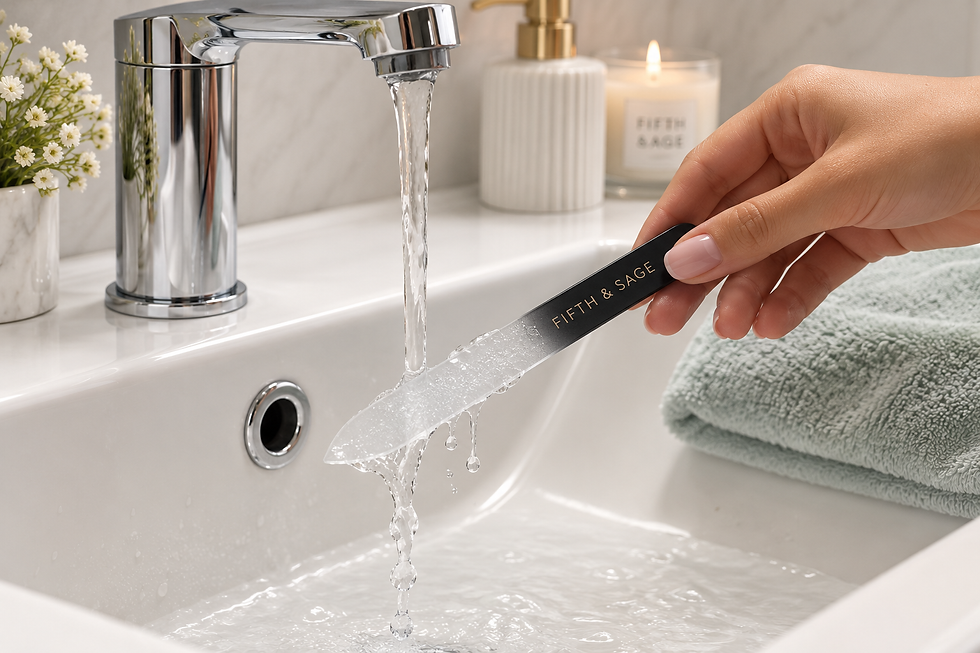
Crystal glass files are much easier to clean. You can wash them with soap and water, rinse away nail dust, and let them dry. Some people also wipe them with rubbing alcohol after use. That makes glass a better option if you like your tools neat and fresh.
This does not mean a glass file belongs to everyone in the house. Personal nail tools should stay personal when possible. Sharing can spread fungus or other unwanted nail issues, especially if someone has a nail infection or broken skin nearby.
A clean tool also just feels nicer. No mystery grit. No fuzzy old board. No “how long has this been in my drawer?” energy.
Cost is not as simple as cheap versus expensive
At first glance, traditional files win on price. You can buy a pack for very little, stash them everywhere, and not care if one disappears into the couch.
Crystal glass files cost more upfront. That can feel silly if you think of nail files as disposable. But if you regularly replace emery boards, the math changes.
A glass file can pay off because you are not buying the same little board again and again. It also reduces waste. That does not mean everyone needs to throw out every traditional file right now. It just means a long-lasting tool can be the smarter buy for regular nail care.
Try thinking about cost in three ways:
Upfront cost
Traditional files are cheaper at checkout.
Cost over time
Crystal glass files often win if you keep one for years.
Cost per good manicure
A smoother file that you actually enjoy using may save you from nail snags, uneven shaping, and repeat fix-ups.
There is also the “where did my file go?” cost, which is emotional and cannot be measured. Keeping one nice glass file in a case can end the drawer hunt.
The feel test matters more than people admit
Beauty tools are not only about function. They also have a vibe.
A traditional file feels practical. It says, “We have a jagged corner and five seconds to fix it.” It is the nail-care version of a granola bar in your glove compartment.
A crystal glass file feels calm. It says, “Let’s shape this properly and maybe apply cuticle oil while we are here.” It has main-character manicure energy without demanding a salon appointment.
The sound is different too. Traditional files can make that scratchy noise that makes some people clench their teeth. Glass files tend to sound softer and feel less gritty.
If filing your nails makes you wince, a glass file may make the whole routine more pleasant. That matters because the best nail tool is the one you will actually use before a tiny chip becomes a full break.
When a traditional nail file still makes sense
Crystal glass may be the star of this comparison, but traditional files are not useless. They are still handy in plenty of situations.
Use a traditional file when:
You need a cheap backup for your car, gym bag, or travel pouch.
You work with artificial nails and need a specific grit.
You want to remove length quickly before refining with a finer file.
You are building a small emergency kit.
You do not want to worry about breaking glass while traveling.
For acrylics, gels, or extensions, grit choice matters a lot. A regular glass file designed for natural nails may not be enough to shape harder enhancements. In that case, a traditional file with the right grit can be more useful.
Just avoid using a super rough file on natural nails unless you are very careful. Rough files belong to major shaping jobs, not delicate tip smoothing.
When a crystal glass nail file is the better pick
A crystal glass file shines for natural nail care. It is especially nice if you like a clean, polished edge without doing a full manicure.
Choose a crystal glass file if:
Your nails peel at the tips.
You hate scratchy filing.
You want a tool that is easy to clean.
You prefer reusable beauty tools.
You want one good file instead of a pile of tired emery boards.
You like keeping your nails neat between manicures.
It is also great for small touch-ups. A tiny corner snag can become a smooth edge in seconds. No harsh scraping. No over-filing. No dramatic sigh required, unless you enjoy the theater.
The best way to use each file
Technique can make even a simple tool work better.
For a traditional nail file:
Pick a finer grit for natural nails.
File from the side toward the center.
Use gentle strokes.
Avoid sawing hard across the tip.
Replace the file when it becomes worn, dirty, or uneven.
For a crystal glass nail file:
Start with clean, dry nails.
Hold the file lightly.
Shape the free edge with small strokes.
Smooth corners without thinning them.
Rinse the file after use and let it dry.
For both tools, do not file deep into the sides of the nail. That can weaken the shape and invite breaks. A soft square, oval, or squoval shape tends to be easier to maintain than sharp corners.

Side by side comparison
Here is the nail file showdown in one neat chart.
Category | Traditional nail file | Crystal glass nail file |
Feel | Gritty, can be rough | Smooth and gentle |
Best use | Quick shaping, backups, artificial nails with proper grit | Natural nails, fine shaping, regular maintenance |
Durability | Wears down | Long-lasting if not dropped |
Cleaning | Harder to clean well | Easy to rinse and wipe |
Cost | Low upfront | Higher upfront, better long-term value |
Travel | Great disposable backup | Great with a protective case |
Eco factor | Often disposable | Reusable for years |
Nail edge finish | Can leave roughness if used harshly | Usually smoother and cleaner |
The crystal glass file wins most daily-care categories. The traditional file wins for price, availability, and certain heavy-duty jobs.
So which one is better
For most people with natural nails, the crystal glass nail file is better. It is smoother, cleaner, longer-lasting, and more pleasant to use. It is the kind of small upgrade that makes nail care feel easier without making it complicated.
That said, traditional nail files still deserve a spot as backups. Keep one in a travel bag or emergency kit. Use the right grit when you need to remove length fast or work with enhancements. Then let a glass file handle the finishing touches.
The best setup is simple: one quality crystal glass file for regular use, plus a couple of traditional files for situations where cheap and disposable is useful.
Your nails do not need a 12-step routine to look neat. They just need a clean edge, a gentle hand, and a file that does not act like sandpaper with a grudge.

Comments